How to Tone Your Legs and Glutes: Exercises, Strength Training & Cellulite Explained
A Practical Guide to Building Strength, Understanding Body Composition and Supporting Your Fitness Goals
Many people want to improve the strength, shape and appearance of their legs and glutes. Whether your goal is to build muscle, become more active, or better understand changes in your body, several factors are worth considering.
Muscle development, body fat distribution, genetics, skin structure, and natural changes associated with ageing influence the appearance of your legs and glutes.
Although the term toning is widely used, it is not a separate physiological process. What people commonly describe as toned muscles usually reflects a combination of muscle development and the amount of body fat covering those muscles.
In this guide, we explore leg and glute exercises, the role of strength training, how body composition influences appearance, and why cellulite is a normal, common skin characteristic.
We also explain where non-surgical body-contouring treatments fit into the broader discussion of individual cosmetic goals.
What Does It Mean to Tone Your Legs and Glutes?
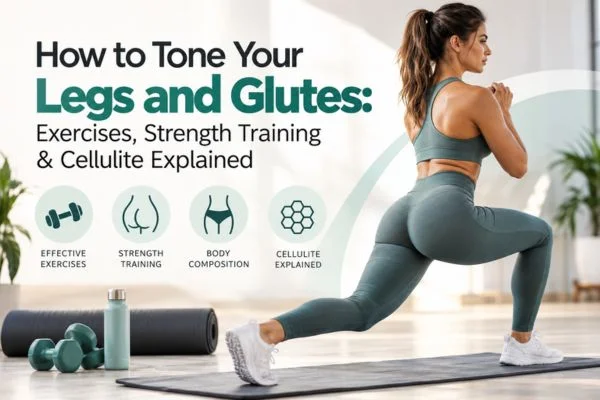
When people talk about toning their legs or glutes, they usually mean building stronger muscles and achieving a particular physical appearance.
The legs and glutes contain several major muscle groups, including:
Quadriceps: Muscles at the front of the thighs that help straighten the knees.
Hamstrings: Muscles at the back of the thighs that support knee bending and hip movement.
Gluteus maximus: The largest gluteal muscle, involved in hip extension and movements such as standing and climbing stairs.
Gluteus medius and minimus: Muscles that help stabilise the pelvis and support hip movement.
Calf muscles: Muscles involved in walking, running and pushing through the feet.
Strengthening these muscles can support everyday movement, balance, mobility and physical performance.
However, muscle development does not necessarily produce a particular appearance. Body shape and fat distribution vary naturally from person to person.
Best Exercises for Strengthening Legs & Glute Muscles
A balanced exercise programme can help strengthen the lower body by working different muscle groups through a variety of movements.
The following exercises are commonly used in lower-body strength training.
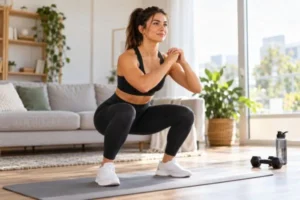
1. Squats
Squats are a compound exercise that primarily work the quadriceps and glutes while engaging other muscles that support balance and stability.
How to perform a basic squat:
Stand with your feet approximately shoulder-width apart.
Keep your chest comfortably upright and engage your core.
Bend your knees and hips as though sitting into a chair.
Lower yourself to a comfortable depth while maintaining control.
Push through your feet to return to standing.
Beginners may find chair-supported squats helpful before progressing to weighted variations.
2. Lunges
Lunges strengthen several lower-body muscles, particularly the quadriceps and glutes.
They also challenge balance and coordination.
How to perform a reverse lunge:
Stand upright with your feet hip-width apart.
Step one foot backwards.
Bend both knees to lower your body in a controlled movement.
Push through your front foot to return to standing.
Repeat on the opposite side.
Reverse lunges may feel more comfortable than forward lunges for some people, but suitability depends on personal mobility and physical health.
3. Glute Bridges
Glute bridges primarily target the gluteal muscles and require no special equipment.
How to perform a glute bridge:
Lie on your back with your knees bent.
Keep your feet flat on the floor.
Gently engage your abdominal muscles.
Lift your hips while squeezing your glutes.
Pause briefly before lowering with control.
As strength improves, some people progress to resistance-band or weighted variations.
4. Step-Ups
Step-ups are a good exercise that works the legs and glutes while supporting coordination and balance.
They involve stepping onto a stable raised platform and returning to the floor with control.
Start with a low step and gradually increase the difficulty as your confidence and strength grow.
5. Romanian Deadlifts
Romanian deadlifts target the posterior chain, especially the hamstrings and glutes.
The movement involves hinging at the hips while maintaining a controlled spinal position.
Because technique matters, beginners may benefit from instruction from a qualified fitness professional before adding more resistance.
6. Hip Abduction Exercises
Hip abduction movements help strengthen muscles around the outer hips, particularly the gluteus medius and minimus.
Examples include:
- Side-lying leg raises
- Resistance-band lateral walks
- Standing hip abductions
- Seated hip abduction exercises
- These movements can complement compound exercises within a balanced lower-body training programme.
How Often Should You Train Your Legs and Glutes?
The right frequency depends on your fitness level, experience, recovery, and goals.
For many adults, training major muscle groups at least twice a week is a useful starting point.
Beginners may start with two lower-body sessions per week to allow recovery time between demanding workouts.
An example introductory routine might include:
- Exercise
- Suggested starting point
- Bodyweight squats
- 2 sets of 8–12
- Reverse lunges
- 2 sets of 6–10 per leg
- Glute bridges
- 2 sets of 10–15
- Step-ups
- 2 sets of 8 per leg
- Side-lying leg raises
- 2 sets of 10 per side
These are illustrative starting points rather than a prescription. Adjust repetitions, resistance, and exercise selection to suit individual ability.
If you are recovering from injury, have a medical condition or experience pain during exercise, seek appropriate professional advice.
Can Strength Training Change the Shape of Your Legs and Glutes?
Strength training can increase muscle strength and, with appropriate training and recovery, support muscle growth.
As muscles develop, their size and shape may change.
However, the visible results depend on several factors, including:
- Genetics and natural body proportions
- Existing muscle mass
- Body fat distribution
- Training consistency
- Nutrition and energy intake
- Age and hormonal changes
- Sleep and recovery
- No single exercise routine produces the same physical appearance for everyone.
Importantly, building stronger muscles provides benefits beyond appearance, including supporting functional movement, physical independence and everyday activities.
Can You Target Fat Loss from Your Thighs or Glutes?
One common misconception is that exercising a particular body area will directly reduce the fat stored there.
This is often called spot reduction.
Although exercises like squats and lunges strengthen the muscles in your legs and glutes, they don’t reliably reduce fat specifically in those areas.
Body fat changes generally occur across the body, and genetics, hormones, and other individual factors influence the pattern of fat loss.
A balanced approach involving physical activity, appropriate nutrition and sustainable lifestyle habits may support overall body composition goals.
However, healthy bodies naturally come in different shapes and sizes.
What Is Cellulite?
Cellulite is a common, harmless change in skin appearance that can create a dimpled or uneven texture.
It frequently develops on the:
- Thighs
- Buttocks
- Hips
- Abdomen
Cellulite occurs when underlying fat and connective tissue interact in ways that affect the skin’s surface.
It is particularly common in women and can occur regardless of body weight, fitness level or overall health.
Having cellulite does not mean someone is unfit, unhealthy or carrying excess body fat.
What Causes Cellulite on the Legs and Glutes?
Cellulite develops through a combination of structural and biological factors.
Genetics
Inherited characteristics influence connective tissue structure, skin thickness and fat distribution.
Hormonal Influences
Hormonal factors, including changes associated with ageing, may influence skin structure and fat distribution.
Connective Tissue
Fibrous connective tissue bands beneath the skin can pull downwards while surrounding fatty tissue pushes against the skin surface, contributing to a dimpled appearance.
Skin Elasticity
Natural changes in collagen and skin elasticity may make cellulite more noticeable over time.
Body Fat Distribution
Fat distribution can influence how cellulite appears, but it isn’t limited to people with higher body fat levels.
Can Exercise Get Rid of Cellulite?
Exercise offers important benefits for muscular strength, cardiovascular health, and overall well-being.
Strength training may change the appearance of the legs and glutes by building muscle, but exercise can’t guarantee it will remove or prevent cellulite.
Cellulite is influenced more by skin structure and underlying connective tissue than by muscle strength alone.
Even individuals who exercise regularly and have well-developed muscles may have visible cellulite.
Treat cellulite as a normal cosmetic characteristic rather than a medical problem that requires correction.
Does Nutrition Affect Leg and Glute Development?
Nutrition plays an important role in supporting exercise, muscle recovery and general health.
A balanced diet provides the energy and nutrients needed for physical activity.
Protein and Muscle Recovery
Protein contributes to the maintenance and growth of muscle mass.
Sources include:
- Eggs
- Fish
- Lean meat
- Beans and lentils
- Tofu and other soya products
- Dairy products and fortified alternatives
Protein needs vary depending on age, activity levels and individual circumstances.
Carbohydrates for Energy
Carbohydrates provide energy for exercise and everyday activity.
Wholegrains, potatoes, fruit and other carbohydrate-containing foods can form part of a balanced diet.
Healthy Fats
Dietary fats support several important body functions.
Sources include nuts, seeds, olive oil and oily fish.
Avoiding Restrictive Diets
Highly restrictive diets may make it harder to meet nutritional needs and recover from exercise.
A sustainable approach to nutrition is generally more appropriate than pursuing rapid changes in body weight or appearance.
Why Hydration Matters
Adequate hydration supports normal physical function and can help maintain exercise performance.
Fluid requirements vary based on factors such as temperature, activity levels, and individual health.
Drinking regularly throughout the day and replacing fluids lost during exercise can help maintain hydration.
However, drinking extra water does not specifically burn thigh fat, tighten the skin or eliminate cellulite.
How Important Is Recovery?
Muscle adaptation takes place over time and depends on a balance between training and recovery.
Allowing adequate recovery between demanding workouts helps the body adapt to physical activity.
Recovery strategies include:
- Getting sufficient sleep
- Allowing rest between challenging training sessions
- Eating a balanced diet
- Staying appropriately hydrated
- Increasing exercise intensity gradually
- Including lighter activity where suitable
Persistent pain, excessive fatigue, or declining performance may mean you need to review your exercise routine.
Can Non-Surgical Body Contouring Complement Fitness Goals?
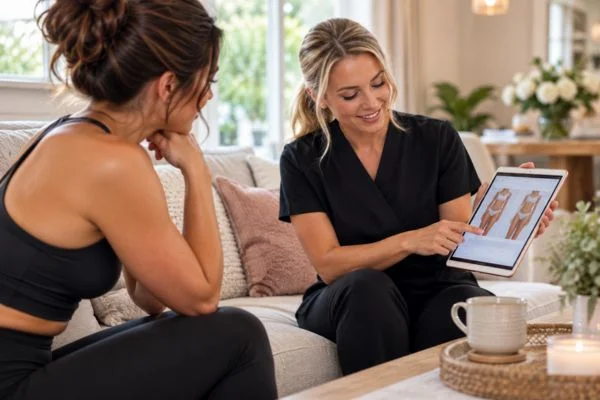
Some individuals who exercise regularly may also be interested in learning about non-surgical cosmetic body contouring treatments.
At Lipo 360, we offer consultation-led information and assessments for selected non-surgical treatments, based on individual suitability and availability.
These may include options such as:
- Cryolipolysis (Fat Freezing)
- Cryolipolysis uses controlled cooling to target subcutaneous fat in selected treatment areas.
- It is intended for localised fat reduction, not overall weight loss.
- It does not build muscle, improve fitness or replace a balanced lifestyle.
Not everyone is suitable for cryolipolysis, so discuss potential side effects, limitations, and expected outcomes before treatment.
HIEMT Muscle Stimulation
High-Intensity Electromagnetic Muscle Training (HIEMT) uses electromagnetic technology to stimulate muscle contractions.
Some devices are marketed for muscle conditioning and cosmetic body contouring.
However, the strength and applicability of evidence vary between devices and treatment protocols.
HIEMT should not be described as equivalent to conventional strength training or as a replacement for physical exercise, rehabilitation or physiotherapy.
Any proposed benefits, limitations and potential risks should be considered during an individual consultation.
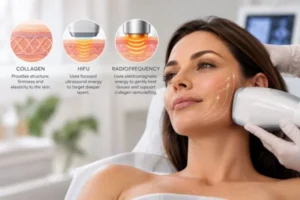
Other Body Contouring Options
Depending on individual circumstances, we may discuss other non-surgical treatments.
Suitability depends on the treatment area, medical history, intended cosmetic goals and the available evidence for the proposed procedure.
Body contouring treatments are not established cellulite solutions and should not be presented as a guaranteed way to achieve a particular body shape.
At Lipo 360, we base treatment decisions on consultation, and we cannot guarantee outcomes.
Frequently Asked Questions
How long does it take to tone your legs and glutes?
Changes in strength may become noticeable over several weeks of consistent training. Visible changes in muscle size and appearance often take longer and vary from person to person.
Are squats enough to strengthen your glutes?
Squats work the glutes alongside other lower-body muscles. Combining different movement patterns, including hip hinges, bridges and lunges, can help provide a more balanced strength programme.
Can walking help strengthen your legs?
Walking supports general fitness and lower-body endurance. Walking uphill or using stairs can increase demand on certain leg muscles, though progressive resistance training is generally more effective for substantial muscle development.
Can you tone your legs without going to the gym?
Yes. Bodyweight exercises, resistance bands, and suitable home equipment can build lower-body strength.
Does losing weight remove cellulite?
Not necessarily. Changes in body fat may alter how cellulite appears in some people, but weight loss does not reliably eliminate it.
Is cellulite a sign of poor circulation?
Cellulite is primarily associated with skin, connective tissue and underlying fat structures. Its presence alone does not indicate a circulation problem.
Can body contouring treatments replace exercise?
No. Cosmetic body contouring treatments do not provide the broader health benefits of physical activity, including improvements in cardiovascular fitness, functional strength and general wellbeing.
Does Lipo 360 offer body contouring consultations?
Yes. Lipo 360 provides consultation-led information about selected non-surgical body contouring treatments.
The consultation process helps determine whether a treatment may be appropriate and lets individuals discuss potential benefits, risks, limitations, and alternatives.
Supporting Your Leg and Glute Goals
Building stronger legs and glutes is a gradual process that benefits from regular exercise, appropriate nutrition and sufficient recovery.
While strength training can support muscle development, genetics, fat distribution, skin structure, and natural ageing also influence the appearance of the lower body.
Cellulite is common and harmless, and you don’t need to change or treat it.
If you’re interested in learning more about non-surgical cosmetic body contouring, a professional consultation can provide realistic information about available options and their limitations.
Explore Your Options with Lipo 360
At Lipo 360, we understand that people have different cosmetic goals and expectations.
Our consultation-led approach lets you discuss selected non-surgical body contouring treatments, your suitability, potential risks, and realistic outcomes.
Treatments aren’t suitable for everyone, and we can’t guarantee any specific cosmetic result.
Lipo 360 provides non-surgical cosmetic services in selected UK locations. Treatments are subject to individual assessment and availability. Cosmetic treatments are not a substitute for medical care, physical exercise or a healthy lifestyle.